
Tournament · Grade
King of the Tatami — Kids (Gi) · In-House
Saturday, 8 August 2026 · Knots & Collar · New Delhi · Gi
Our first kids tournament of 2026 — run in-house at Knots & Collar. ABJJF points, no advantages, everyone fights everyone in their group. Medals awarded; no national ranking points.
Follow live
Categories here are set by age alone — not weight, and not belt. A verified profile is still required to register, because the age has to be real before a child is put in a group.
Before you enter
What this event is
It is an in-house event
Run at Knots & Collar, for our own kids and their families. It is the federation’s first outing on its new platform, and a friendly afternoon rather than a championship.
Medals are real. Ranking points are not.
Gold, silver and bronze are awarded and go on your child’s record. This event carries no national ranking points at all — that is deliberate, so nobody feels they have to win.
Weight is not a criterion
Children are grouped by age and nothing else. With small numbers, splitting further would leave children with nobody to fight.
Any kids belt
Every category takes any kids belt. Where experience is very uneven we may move a child between groups on the day — and we will tell you why.
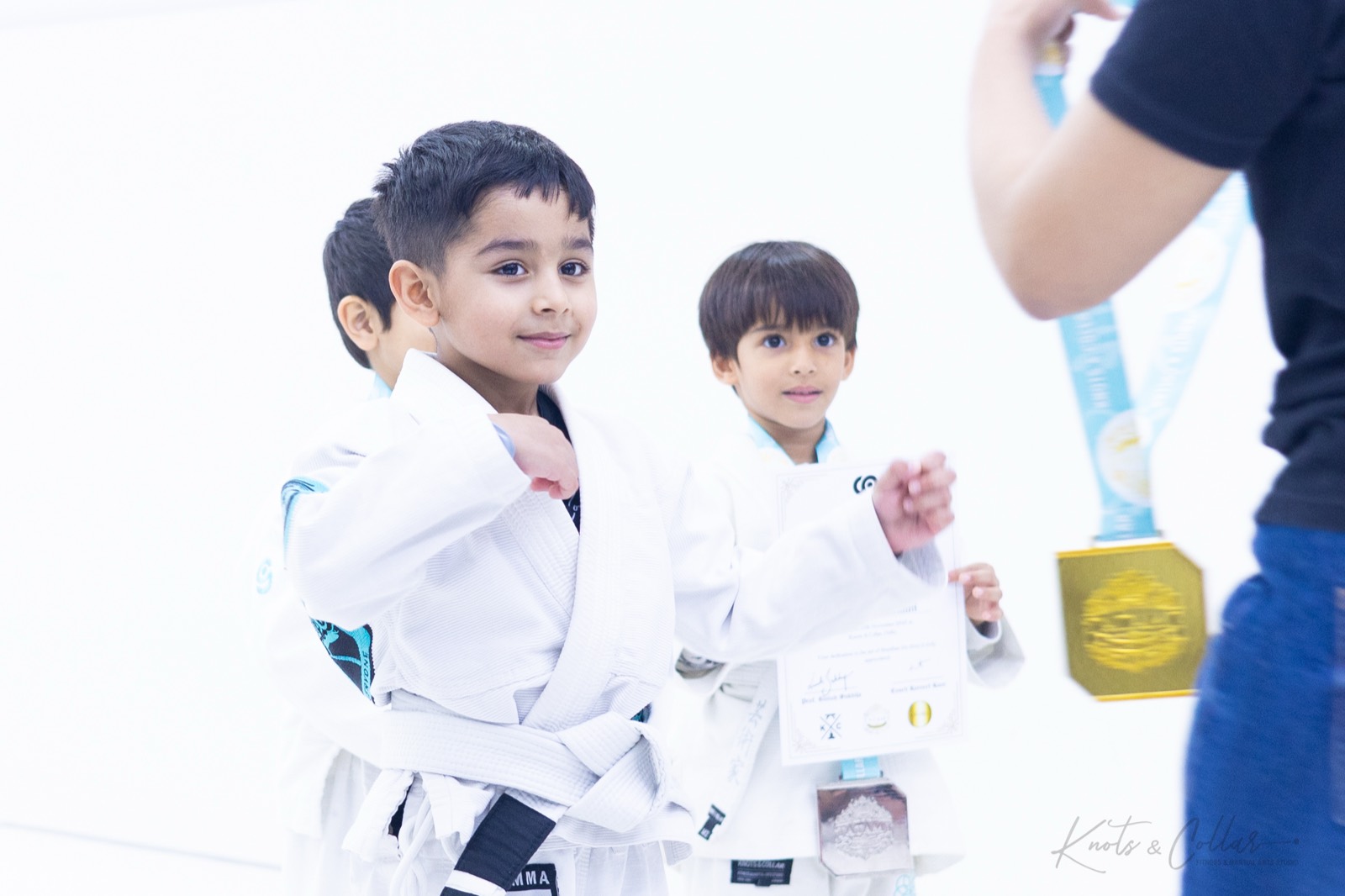
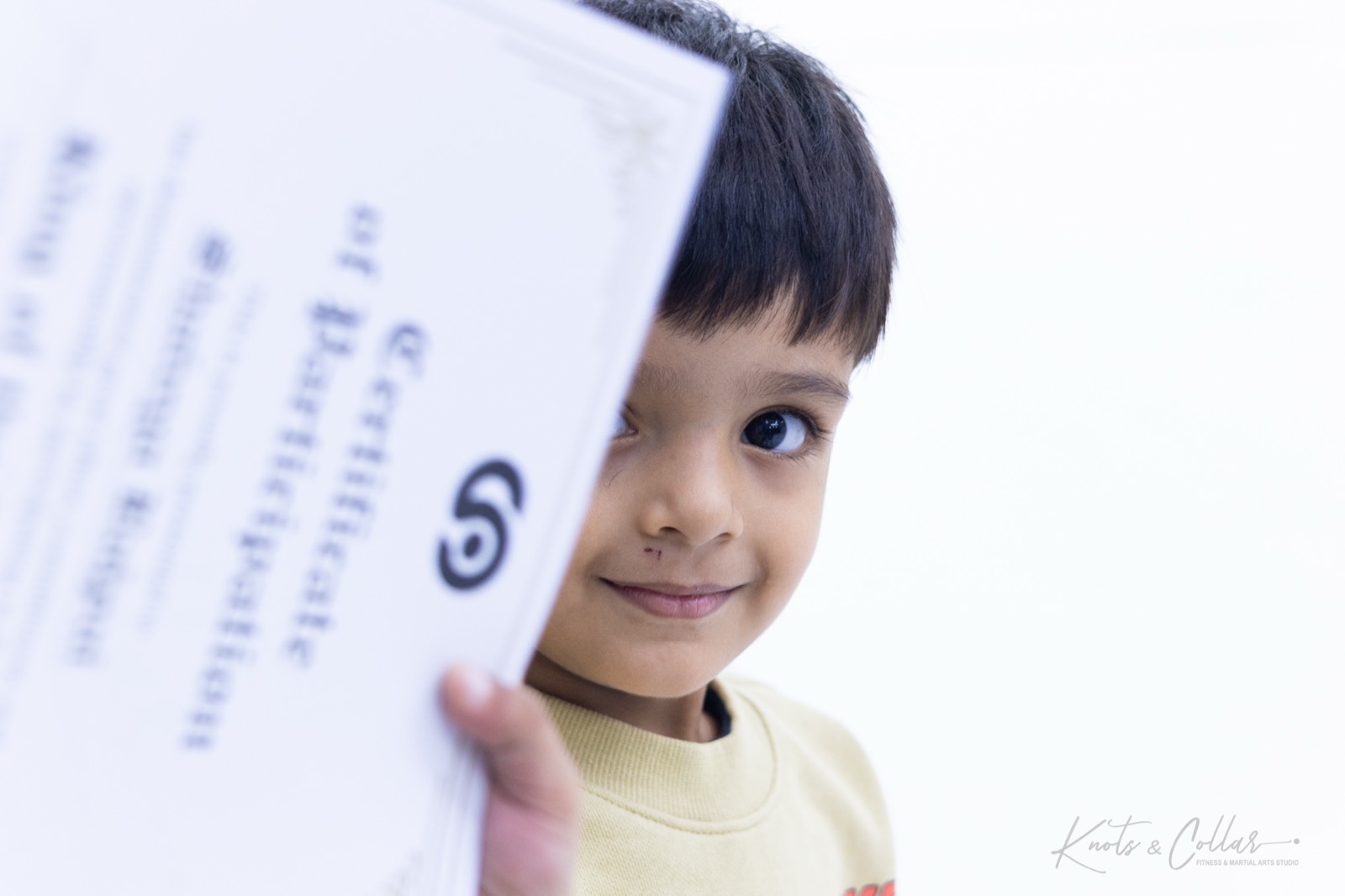
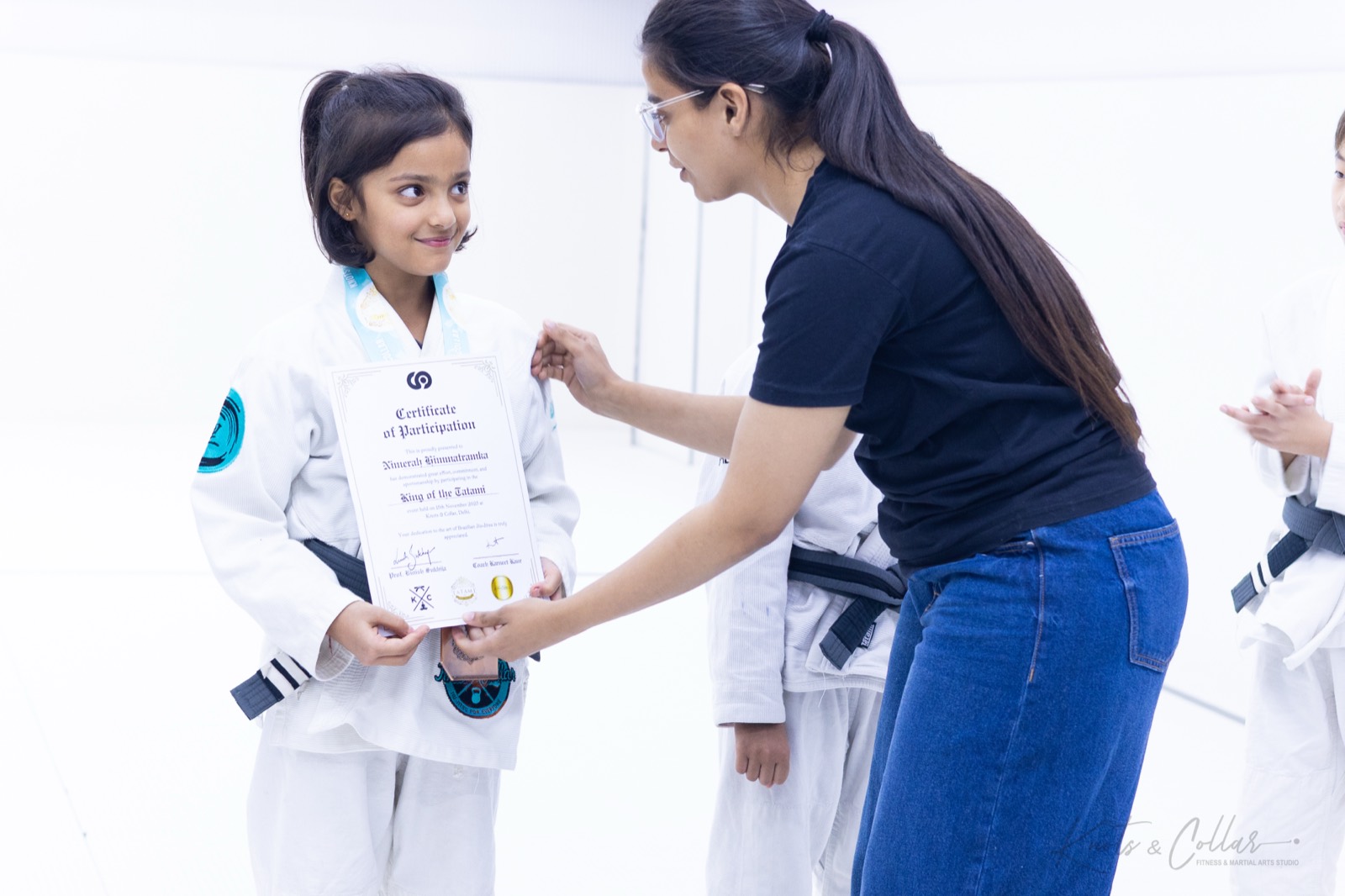
From our last King of the Tatami · Knots & Collar
How the day runs
Everyone fights everyone
- 01
Everyone fights everyone on their side
Each category is split into two groups. Your child fights every other child in their group — so nobody comes all this way for one match and a long drive home.
- 02
The two group winners meet in the final
Gold and silver are decided there.
- 03
The two runners-up fight for bronze
A real match for a real medal, rather than a placing handed to somebody who lost.
The ruleset
ABJJF points
| 2 | TakedownPutting your opponent on the ground and staying on top. |
| 2 | SweepReversing from the bottom so you end up on top. |
| 2 | Knee on bellyKneeling across your opponent’s stomach, in control. |
| 3 | Guard passGetting past their legs into a controlling position. |
| 4 | MountSitting on their chest, in control. |
| 4 | Back controlTaking their back with both heels hooked in front. |
There are no advantages at this event. A point is scored or it is not — nothing is awarded for nearly finishing something.
How a match is decided
In this order. The first one that separates them ends the match.
- 1
Submission
A tap ends the match immediately, whatever the score. Children are taught to tap early and often — it is how they train safely, and it is never treated as a failure here.
- 2
Points
If nobody submits, the higher score wins. Points only — there are no advantages.
- 3
Golden point
Level on points at the end? Two short sudden-death periods. The first person to score anything wins.
- 4
Percentage tie-break
Still level after both golden-point periods? The match is decided on the share of points each child has scored across the whole bracket. See below.
The one nobody has met before
If children finish level
In a group where everyone fights everyone, two or three children can easily finish on the same number of wins. When that happens the places are decided by the share of points each of them scored in the matches they played against each other.
Worked through
- Suppose A, B and C all finish level.
- A beat B 6–0, and drew 0–0 with C. A scored 6 of the 6 points in its own matches — 100%.
- B lost to A 0–6, and beat C 6–2. B scored 6 of the 14 points in its matches — about 43%.
- C lost to A 0–0 and to B 2–6. C scored 2 of the 8 points in its matches — 25%.
- So A places first, B second, C third.
Matches against children outside the tie are not counted — a tie between two children is settled by what happened between them, not by who happened to draw an easier opponent.
Very occasionally the percentages come out identical. The referee then decides, and the decision is recorded as a referee’s call rather than dressed up as arithmetic.
Registration has closed.
Brackets are built from the athletes who entered before the deadline.
Brackets
6 groups.
Everyone in a group fights everyone. Medals come from the standings — a win beside a name means that bout is done.